Unknown's avatar

Thanks and all, but no thanks: I don’t want men in my feminism

Yes, I’m one of those feminists who doesn’t want men in feminism, the type who doesn’t think men can be feminists.  I’m quite happy to talk with you, work in partnership with or alongside you, even count a select bunch of you amongst my friends, but call you feminists: “Nah.”

Men – you’ve had since time immemorial to get your shit together.  For the sake of argument, let’s start from the assumption that as a species we’ve been around for about 200,000 years.  Evidence suggests that early societies were egalitarian but that with the development of agriculture and domestication around 11,700 years ago, came the emergence of patriarchy, of men’s domination of women.  What we refer to as first wave feminism gained prominence from the late 19th and early twentieth centuries, though this is western-centric and writes out women’s earlier struggles in Europe from the 15th century.  Even if we take  Mary Wollstonecraft’s  A Vindication of the Rights of Woman published in 1792 as the start of women’s fight for our rights, men had eleven and a half thousand years to do something about sex inequality – if only a) you had wanted to and b) you weren’t too busy enjoying the benefits.  What’s suddenly happened for you to want to get in on the act?

Feminism is more than the demand for rights for women or equality between women and men. For me, feminism is the fight for the liberation of all women as a class from subjugation under patriarchy.  Loose the structural analysis and feminism gets lost in the rights of the individual, in identity led politics and notions of choice and agency fail to take sufficient account of context and impact.  Get men in and feminism is almost inevitably reduced to the problem of inequality and usually it isn’t so long before the ‘men suffer under patriarchy too’ line is trotted out.

Men, revolutionaries,  when you fight for equality you’re too quick betray your sisters.  Women were fighting for the rights of women as a class, as well as the overthrow of totalitarian regimes in the Arab Spring, but women’s status has been seriously threated in the countries that achieved changes of government.  The end of communism in Eastern Europe, and with it the rise of choice and consumerism furthered the commodification of women and men’s right’s to choose to profit and purchase. In the UK,  the Socialist Workers Party handling of rape shows that misogyny, sexism and sexual violence were seen as equality issues of lesser importance.

Men, you take up too much public space.  This post by End Victimisation and Blaming cites Dale Spender:

“Present at the discussion, which was a workshop on sexism and education in London, were thirty-two women and five men. Apart from the fact that the tape revealed that the men talked for over 50 per cent of the time, it also revealed that what the men wanted to talk about – and the way in which they wanted to talk – was given precedence.”     […]

“There is no doubt in my mind that in this context at least (and I do not think it was an atypical one) it was the five males and not the thirty-two females who were defining the parameters of the talk. I suspect that neither the women nor the men were conscious of this. There was no overt hostility displayed towards the females who ‘strayed from the point’, but considerable pressure was applied by the males – and accepted without comment from the females – to confine the discussion to the male definition of the topic.”

Spender is absolutely right if my experience is anything to go by, the situation she described was not atypical. In the media men dominate, they take up disproportionate space. In politics men dominate, they take up disproportionate space.  Even on public transport men dominate, you take up disproportionate space as illustrated by this blog and this.  Seriously fellas, we know that your balls aren’t that big.

This piece by Glosswitch on the vitriol directed towards a twitter hashtag #sharedgirlhood and its protagonist Victoria Brownworth (@VABOX) explores the importance of a collective approach to women’s oppression.   Too few women get to know the joy of mass women-only spaces. It’s increasingly rare to find even a feminist event that is women only, and those that seek to provide this, increasingly face challenges.  Bullying from men’s rights extremists led to the London Irish Centre cancelling a booking for the women-only radical feminist conference Rad Fem 2013 for safeguarding reasons and because the venue could not handle the volume of complaints, though the conference went ahead peacefully elsewhere.  What’s the big threat?  Are you afraid that we’re plotting to overthrow male privilege or something?

Men, how about you prioritise taking responsibility for your violence above asking ‘What about the men?’  Services for women who have experienced sexual and domestic violence are increasingly required by commissioners to offer services to men too, despite evidence that this is not what women want, despite women being overwhelmingly the victims and men being overwhelmingly the perpetrators of sexual and domestic violence. Despite even the recognition of this by the government in its strategy to end (male) violence against women and girls. Incidentally men, if you focussed on ending male violence, you’d be helping a whole lot more men – and women – than you are by overstating your victimisation by women.

Men, how about you challenge the pornography tastes of some of your brethren?  Other men and boys listen to you, use their sexism for the greater good.  How about you challenge the sexual objectification of women without needing to call yourselves feminists to do so. Just do it because you recognise that objectification is damaging to women, a cause and consequence of inequality that upholds patriarchy.

Men, how about you sort out the rest of society – that in which you dominate – and make that more equitable and safer for women before you insist on occupying our space?  There is a role for you, plenty that you can do,  and I really hope that you will be influenced by feminism but in my experience, it is the men who exclude themselves from identifying as a feminist, who instead see themselves as allies, supporters or pro-feminist who have the more sophisticated analysis.  Men who realise that feminism is not about or for them, not about what they think.

The silencing of women by men in the public sphere is deafening; the habit of overlooking and failing to respond to women’s subordination is entrenched, structural and serves men as a class. By insist on inclusion in feminism, once again, men’s wants and needs are prioritised over women’s and women’s subordination is reinforced.

Unknown's avatar

Feminism, single issue campaigns and disagreeing

I’d like to be able to write this without referring to the campaign that has prompted this piece, I’d like to but I’m not sure that in doing so I’d be able to express myself well enough; I’d like to because I support the single objective of that single issue campaign and I don’t want to knock women who are trying to make a difference. Sadly however, as described in this blog by Terri Strange, by describing themselves as “not anti-porn” the campaigner(s) behind ‘No more Page Three’ have located the campaign within a feminist political position that I cannot ascribe to.

I supported the ‘No More Page Three’ campaign because the sexual objectification of women – like men’s violence against women – is a cause and consequence of inequality between women and men.  My support of the single issue campaign was and is consistent with my wider perspective.  Pornography is the eroticisation of unequal power relations and women’s subjugation. Add a racial analysis to that perspective and the problems are exacerbated. This is not my feminism.  My feminism is rooted in a structural analysis of power relations rather than identity politics and choice.  A feminism based on a structural analysis of power relations is just as able – in my opinion, better able – to encompass multiple forms of advantage and oppression, such as class, race and disability within and in addition to analysis of sex-class inequality, as identity based feminism.

The eroticisation of women’s bodies as objects of consumption works because women’s and men’s bodies serve different purposes in a patriarchal capitalist society.  For a decent and thorough analysis, please read Julia Long’s ‘Anti-porn or Gail Dines’ ‘Pornland’. For the purposes of this piece, the parody Wrecking Ball (Chatroulette Version)  illustrates my position perfectly well.   In patriarchal society, treating women and men’s bodies the same, isn’t the same.  It just doesn’t work.  Why?  Because of sex inequality.

I understand why some feminists are reluctant to support single issue campaigns.  They’re absolutely right if they argue that we are not going to achieve the liberation of women, the end of women’s subjugation under patriarchy though relatively easily achievable single issue campaigns.  I however, can live with that.  As a feminist whose primary focus is male violence against women, I was  more than happy to support Caroline Criado-Perez’s bank notes campaign and explained why here:

Violence against women and girls is both a consequence and cause of inequality between women and men.  Of course, I am not suggesting that the inclusion of a woman on banknotes would reduce male violence against women and girls.  But I do believe that when we have a choice about whether our actions reinforce or challenge inequality between women and men, if we chose to ignore or exclude women, then we are guilty  of relegating women to a second-class status.  If we think that making women invisible is acceptable, then we are part of the problem.

The problem is different where single issue campaigners knowingly place their objectives outside or in opposition to a wider political analysis.

As a feminist, I have learned a lot from women who have disagreed with me and challenged me, women who have pointed out the inconsistencies within my own comfort zones.  It’s still happening all the time and yet I still cling to behaviours, habits and thought processes that I  know don’t cut it. And I recognise the inadequacy of the choice based defence that I occasionally fall back on.  However, sometimes I listen, sometimes I learn, sometimes my position shifts.  That’s why I cannot agree with those who are critical of the feminists who are critiquing the “not anti-porn” position of the ‘No More Page Three’ campaign.   I am not criticising their campaign, the huge time and energy that has been invested in pushing for change, but I am challenging, questioning and disagreeing with the political – or lack or political –  analysis.  As a feminist, I hear and learn from women that I sometimes agree with, sometimes disagree with, all the time.  Most disagreements do not negate the value of the things I learn.  We need to be able to discuss and disagree.

I hope that the ‘No More Page Three’ campaign achieves its aim.  But I want to see the campaign succeed because pornography is a cause and consequence of inequality and I want to be able to support the campaign because it is part of the solution, not just shifting the problem. And I want to be able to say that – in the hope of spreading a structural feminist analysis –  without it being seen as an attack on other women who are fighting for a better world.

Unknown's avatar

Don’t these feminists just need to lighten up and have some Halloween fun?

Artist Emma Bolland took and shared on twitter a photo of a mannequin in the window of the Amazing Party Company fancy dress shop in Leeds.  After seeing the photo, I called the shop to complain, by this time they had removed the knife from her chest, they told me “It isn’t a woman who has been stabbed.  It’s a zombie nurse.  Zombie’s don’t really exist. It’s just a bit of fun”

The stereotype of the ‘sexy nurse’ isn’t fun, it is objectification, 90% of nurses are women, it is reducing the role of a nurse to a woman’s sexual agency. It is pure and simple sexism. A UK poll found that for men a nurse was the most sexually-fantasized-about job. Reducing nurses to sex objects is an insult to the hard work and professionalism of the thousands of women in nursing and contributes to the devaluing of the role and towards sexual harassment of nurses in their place of work.

As the Amazing Party Company – who describe themselves as a family run retail business –said “Zombie nurses don’t exit.”  Zombie nurses don’t exist, but stabbed women do, stabbed nurses do. I’d like to see them explain the fun of stabbed nurses to Penny and John Clough, whose daughter, 26 year old nurse Jane Clough, was stabbed 71 times by her former boyfriend Jonathan Vass before he slit her throat in the hospital car park.  Or the family and friends of 25 year-old estate agent Nicole Waterhouse from York or 28 year-old Gabrielle Stanley from Doncaster, both of whom were stabbed to death this month.  From my records of women killed through suspected male violence I know that 33 UK women were stabbed to death by violent men in 2012.  At least a further 11 women have been killed though stabbing so far this year, probably more – if 2012 was typical, stabbing seems to be the most frequently used form of murder. Stabbed nurses, stabbed women, I’m failing to see the fun side.

Those stabbings take place within a wider context of fatal male violence against women.  In total, I know of 120 women killed though male violence in 2012 and a further 100 already suspected so far this year. Not fun.

Jane Clough  had written in her diary that she thought Jonathan Vass would try to kill her after she ended their relationship.  In the December before he murdered her, Vass was charged with 9 counts of rape and 4 of assault against Jane. Against the reported wishes of both the police and the Crown Prosecution Service, Judge Simon Newel granted him bail.  Making male violence against women fun contributes to a society that doesn’t take the threat of male violence against women seriously. A society that doesn’t taken male violence against women seriously is one in which bail can be  granted to men with a history of violence against women.

I’m still not finding this fun.  Happy Halloween Amazing Party Company.  Did you make  a good profit out of the fun that is fatal male violence against women?

Image

Unknown's avatar

On becoming a working class feminist and ‘choice’: a personal reflection

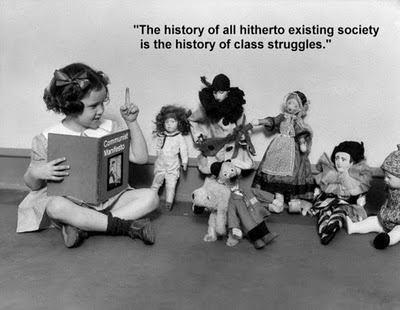
history is history of class struggles

I’ve been to two feminist events this year where the issue of class was presented by women who were not working-class or of working-class background. Each woman (three women, two events) was an articulate speaker who raised interesting and valid points but that isn’t the issue, as feminists there is no need for us to make class an anthropological issue.  Sure, feminism has a class problem, but that does not mean that there aren’t any feminists who are able to articulate class issues from a position as anything other than ‘other’.  It’s only as I wrote this that I realised how much I talked about ‘choice’ and how my own story is about the ways that class and sex influence and limit choice.

I’m not going to even try to define class here, I’ll leave that to the sociologists; but rather than continue to gripe about middle-class feminists commandeering class, I thought I ought to talk about what being a working-class feminist means to me.

My mother and biological father met working in John Crowther’s Mill, a textile manufacturing mill in Milnsbridge, West Yorkshire. It was 1967, the year that the Abortion Act was passed in the British parliament.  Pregnant at 17 to a married Sicilian immigrant who didn’t speak very much English, my mother married her on-off boyfriend,  I’m not sure how much ‘right to choose’ she really had.  She doesn’t recall knowing that abortion was an option –“I never even thought about it,” –  and the same with the pill, which had been available since 1961 “I never even thought about that either, I might’ve heard of it ….”.  There was perhaps a 50-50 chance that she was marrying the father of her soon-to-be child, but she wasn’t; the best-man, not the groom was the daddy, though it was  much later that I became aware of this.  As far as I was concerned, up until my early 20s, I was the daughter of an ex-mill worker/factory packer/auxiliary-nurse/shop-worker mother and a plumber/builder dad.

Class is not simply about poverty.  We weren’t poor. My mother had been, she’d grown up as the third child and oldest girl of 12 siblings.  I’ve heard stories of six-mile walks in winter by children to borrow coal from relatives; the need to get home early to get the best pick of clothes for a night out; shared beds, not just shared rooms; coats that doubled as blankets and lying to friends about birthday presents that never transpired.  I never went hungry and most of our meals were home cooked, the smattering of convenience foods being more about exciting 70s fashions than anything else.  My ‘dad’ was controlling (tight) with money, though I’d say this was more about control and power than poverty, he drove a flash American imported sports car, but my sister and I grew up in a mixture of new clothes, family hand-me-downs and jumble-sale bargains, but if that was poverty or disadvantage, I was barely aware of it .  My mum’s youngest sister, my aunt, was less than four years older than me and I looked up to her, growing into the clothes that she was growing out of was a welcomed rite of passage,  The annual jumble sale at my primary school a much anticipated event among all my friends.  Memories of a new coat from C&A (for anyone who doesn’t know, by no means an expensive brand) are bittersweet, my mum cutting the price label out and telling me to pretend that it had cost less than it actually had because she wasn’t supposed to spend that much on clothes. Years later,  she told me that one of the reasons she’d returned to work was because ‘she wasn’t given’ enough money for clothes for the children. I remember walking to school with a friend, I would have been any age between 8 and 11, and her telling me that her dad said ‘if he had your dad’s money, he’d spend more of it on his children’, and trying to argue my way out of the stinging indignant humiliation.

I was educated at local state schools, attending one of the country’s first purpose-built comprehensives, long before the concept of choice was widely used in free education.  For whatever reasons, I did ‘well’ at school.  My secondary school was large, I think approximately 1,800 pupils;  some classes were streamed according to ability, so in time, though I wasn’t conscious of this, my peers became increasingly (but by no means exclusively) those doing well at school  and, therefore,  not coincidentally, increasingly those from relatively privileged backgrounds.  Looking back, class meant my subject choices at ‘O’ and ‘A’ level weren’t hampered by the parental influence of the need to build a good career foundation, less pressure to revise and no pressure to stick at learning to play an instrument, things that I experienced as freedoms and which were sometimes the envy of friends from more advantaged backgrounds. So, I picked ‘O’ levels based on a mixture of what I wanted, which teachers I wanted to avoid and some minor school regulations based on what was deemed appropriate –or not – for a bright kid. (Therefore a language and not typing or the wonderfully named ‘office practise’, and physics not general science.)

I didn’t really choose to do ‘A’ levels but picked some because that’s what my peers were doing (again free choice so: Sociology, Geography and Art) and a further education college rather than the  small school sixth form because I’d snogged and was avoiding too many of the boys that would have been in the sixth form.  I wasn’t sure that I’d end up at the sixth form college anyway, I applied for jobs over the summer holiday and remember receiving a lovely hand-written letter from  Batley’s Cash and Carry telling me that I had ‘far too much going for me’ to leave school and work there.  My ‘dad’ asked me why I was bothering, I’d only be having babies, so I was just wasting time.

‘A’ level college was the first time I recall experiencing class making me feel different.  The main intakes were from local fee-paying schools, or so it seemed, maybe it was just that I knew only a handful of similar stragglers from my old school and they were a slightly larger,  but much louder,  pack. I felt silenced by their confident chatter, although also from Huddersfield their accents were different from mine.  I didn’t mix with them. I couldn’t like The  Smiths, ‘cos they did. I dropped ‘A’ level art because I couldn’t find my voice amongst theirs, I had a nagging feeling that I was as good as most of them, better than some, but I knew that after college, if this was what I had to compete with, I would be lost.

Around the same time, I started doing an evening class in psychology.  I hadn’t chosen biology ‘O’ level, so this was my introduction to dominant and recessive genes. The tutor of my class must have been relieved when I decided that my impossible ‘dominant gene’ brown eyes from parents with recessive gene blue and green eyes and my blond and blue-eyed younger brother and sister meant that I must be a ‘genetic throw-back’.  I remember coming home and talking about it, and what now I might call the sound of tumbleweed.

Through sociology, I found a name for the feeling of being different: class.  It was 1984/85, although Huddersfield was a mill not a mining town, the miners’ strike felt alive around us and anyway the job losses were echoed in the decline of the mills.  I discovered Billy Bragg and pop and politics merged in my teenage identity. Sometime after ‘class’, sociology introduced me to the concept of feminism.   “How stupid!”, I thought, how could I ever have more in common with the posh girls from the private schools than a man who worked in a pit? Luckily though, as we moved on to socialist and radical feminism, the ideas of women like Shulasmith Firestone and Sheila Rowbotham showed me how class and feminist politics needn’t be mutually exclusive – and honestly, since the exposure to ideas through ‘A’ level sociology,  nothing has been the same.

I drifted into university much in the same was that I drifted into ‘A’ levels.  My mum had left my dad.  I was the first of my family to go to university, though my grandparents’ twelve children have had twenty-five children between them and several of my cousins and one of my aunts have also since attended university.  I was in the South at the University of Kent. Northern, working-class, from a broken-home, back-combed hair, second hand 50/60s dresses and old men’s coats.  I felt different and I wanted it that way, but when the daughter of a doctor (she was studying law)  told me I was lucky, that I had a credibility that she could never have, I knew she was talking shite.  I stuck with sociology, read more about Marx, about domestic and sexual violence, about patriarchy.  We marched for miners, we marched against Thatcher, against Clause 28 and against the Poll Tax.  I learnt the truth about my parentage and those dominant gene brown eyes.  I wasn’t a genetic throw-back but half-Italian. What I saw in the mirror now made sense. I met my biological dad (if I was expecting Al Pacino or Robert De Niro, I got Danny De Vito) a handful of new half-brothers and sisters and my Sicilian/Italian family.

Having the benefit of a degree (through a free education) and a working-class background places me on a class margin, add to that a sense of always feeling ‘a bit different’ in the home I grew up in but not knowing why.  Neither one thing nor the other, always a bit too much of ‘something different’ to truly feel in place anywhere. If I’d ever doubted it, my work history in women’s refuges and hostels means that I have met countless women and children whose backgrounds and life chances make my own look steeped in advantage and privilege.  I can compare my own life to that of my mum, to my sister and brother and know that I have had opportunities that they have been denied.  But still, attending meetings with people whom I don’t know, especially ‘higher-ranking’ professionals means that when I first open my mouth and speak and my working-class Yorkshire accent comes out, I frequently detect a quick flicker of surprise in their eyes.  Being a woman and working-class means that I am no stranger to hearing an ignored suggestion that I have made earlier,  later  repeated by a man, or in a different accent or both, accepted and valued.  Being a woman and working-class means that only very recently, I stopped telling myself that long-haul holidays, talking on the radio, writing a blog, buying the car that I wanted were not for ‘people like me’.

Unlike age, disability, gender reassignment, disability, marriage/civil-partnership, pregnancy/maternity, race, religion/belief, sex and sexual orientation, class it not a protected characteristic under the Equality Act 2010 which sought to protect people from discrimination in the workplace and in wider society, replacing previous anti-discrimination laws with a single Act.  It means that the analysis of class, of poverty, of the importance of access to education and their impact on life chances is missing from most equalities training and equality policies.  Its inclusion could potentially have created a tool with which to fight the policies of class-hate, the welfare reforms that disadvantage the poor  and stigmatise poverty,  the erosion of free education pushed through by recent governments of all persuasions.  Many of the accidental and fortuitous ‘choices’ that I made, are now denied to children who are like the child I was.

My mum has told me that she doesn’t know where I got my ‘strong opinions’ but I do: free education, a sociology degree and feminism.  Choice doesn’t exist without the limits of social context.  My life experiences and my education have made me the woman that I am, the choices that I didn’t have are as much part of me as the choices that I made.  Professor Liz Kelly recently made what seemed at the time to be a passing comment, that class was about access to ideas.  Looking at myself, this was absolutely critical.  The thing that changed me was access to ideas.

To those through history who fought for free and compulsory education for all children, for equality for girls and women, for every feminist, class warrior and teacher who shaped my ideas, and my mum –  accidental teenage parent without the choice of the pill or abortion and with a baby to ‘the wrong man’ – thank you for giving me somewhere to grow ‘strong opinions’.  To organisers of feminist events who, rightfully want to talk about the advantages and disadvantages of life opportunities according to class, let us working-class women with strong opinions speak for ourselves. We can, you know; and we have things to say that are worth listening to.

Unknown's avatar

Who gets to define femicide?

I’ve been undecided about the use of the term ‘femicide’  to describe the list of names of the UK  women killed through suspected1 male violence.  The term is useful because it takes the concept of fatal male violence against women beyond domestic violence and that’s important, many people’s understanding of the concept of fatal male violence against women stops and ends at women killed through domestic violence.  However, that the term ‘femicide’ in itself fails to name the male as the agent is problematic.  An early definition of femicide as “the killing of females by males because they are females” dealt with this, though there is a convincing argument for the inclusion of women killed by women because of the influence of patriarchal values.

In 2012, the participants of the Vienna Symposium on Femicide agreed the following:

Femicide is the killing of women and girls because of their gender, which can take the form of, inter alia: 1) the murder of women as a result of intimate partner violence; 2) the torture and misogynist slaying of women 3) killing of women and girls in the name of “ honour”; 4) targeted killing of women and girls in the context of armed conflict; 5) dowry-related killings of women; 6) killing of women and girls because of their sexual orientation and gender identity; 7) the killing of aboriginal and indigenous women and girls because of their gender; 8) female infanticide and gender-based sex selection foeticide; 9) genital mutilation related femicide; 10) accusations of witchcraft and 11) other femicides connected with gangs, organized crime, drug dealers, human trafficking, and the proliferation of small arms.

As a list of some of the forms that femicide can take, this is helpful and aids the understanding of femicide as something much wider than domestic violence.  The use of the term ‘inter alia’ meaning ‘among other things’ indicates that even they were not convinced that this included everything.  They’re right, it certainly doesn’t include everything.  The definition fascinates me.  It is 123 words long.  123 words and the words man, men or male do not appear once. The full declaration is over 800 words long.  It mentions men and boys once, in reference to ‘sensitising education programmes’. The argument that femicide can also include the killings of women by women because of the influence of patriarchal values is not so convincing that it warrants the absence of the identification of men as perpetrators in a declaration to take action to end femicide that spans over 800 words. The vast majority of women who are killed, are killed by men, whilst it is also true that the vast majority of killers of men are also men, this cannot warrant the failure to name men as the killers of women.  One of the significant achievements of feminism is getting male violence against women into the mainstream and onto the policy agenda.  One of the threats against this achievement is that those with power take the concepts and under the auspices of dealing with the problem shake some of the most basic elements of feminist understanding right out of them.  The exclusion of male violence from the declaration on femicide is inexcusable.  Inexcusable because failing to name the agent will not help us to end, or even reduce, fatal male violence against women.  Could failing to name men as the agents of femicide be a patriarchal political act?

I’ve written about the murders of 18 year-old Samantha Sykes and 17 year-old Kimberley Frank in other pieces.  It was their murders by Ahmad Otak that convinced me that a list of women killed by men through domestic violence, simply was not enough. Otak wasn’t the boyfriend of either of them, but of Elisa Frank, Kimberley’s sister.  The murders of Samantha and Kimberley don’t fit the definition of domestic violence, but they’re absolutely about a man trying to exert power, control and coercion in his relationship, reports of their murders have stated that he was attempting to show Elisa that he would allow no-one to stand in the way of them being together. The murders of Kimberley and Samantha were every bit about male violence against women, control and coercion through the display of the power to kill.  I doubt anyone would try to say that the murders of Samantha and Kimberley weren’t femicide.

I’ve been challenged about the inclusion of older women killed in the process of robberies and muggings in my work naming the women killed through male violence.  In 2012, six older women, aged between 75 and 88 were killed by much younger men, aged between 15 and 43 as they were robbed or mugged:

Irene Lawless, 68 who was raped, beaten and strangled by 26 year old Darren Martin. Pornography depicting rape and featuring older women was found on his home computer.

Margaret Biddolph, 78 and Annie Leyland, 88 were strangled and robbed by Andrew Flood, 43, who knew them through his job as a taxi driver. He’d also robbed a third woman elderly woman and threatened to kill her cat.  He was clearly targeting women.

Delia Hughes was 85 when she was killed by 25 year-old Jamie Boult. He struck her repeatedly about the head with a hammer, a hammer he was carrying specifically because he intended to kill.  When Boult was sentenced, Delia’s daughter, Beryl said

“I’ve never seen a dead body before. Seeing my mum her head battered, covered in blood, black and blue with bruises, sitting in a pool of blood, blood splattered on the walls, this is a sight that will stay with me for the rest of my life.”

The murder of Delia Hughes was not simply a robbery gone wrong.

Similarly, Jean Farrar, 77, was kicked and stamped on by Daniel Barnett, 20, until she was her virtually unrecognisable.  Her  son Jamie was absolutely right when he said 2Daniel Barnett did not need to enter my mother’s house that night. He chose to. Upon finding my mum at home, he easily could have left.  Instead he chose to beat her and throw her against the wall. And when she screamed in pain, he chose to kick her, stamp on her, and jump on her head until she was unable to scream any more.”

Whatever the rights and wrongs of Jamie Boult and Daniel Barnett’s choices to carry out robberies, that these choices also included choices to inflict fatal violence was not inevitable.

Paula Castle was 85 when she was knocked to the ground when she was mugged by Jiervon Bartlett and Nayed Hoque who were both 15.  They may not have intended to kill her, but they also mugged another woman the next day.  They were clearly targeting women.  

I’ve been told that the killing of elderly women as part of a robbery or mugging is “not femicide”.  I disagree.  These women were killed because they were women.  And if their killings are not femicide, then it is because the term femicide is being misused

Epistemology questions what knowledge is and how it can be acquired. The acquisition and identification of what constitutes knowledge does not escape structural inequalities of sex, class and race.  Dr Maddy Coy of the Child and Woman Abuse Studies Unit at London Metropolitan University calls for the recognition of practice-based evidence, for example from specialist women’s organisations, to be considered as expertise as worthy as that of academics.  It’s ‘participant observation’ when it’s produced by an academic, it’s ‘anecdotal’ when it comes from a women’s services provider.  Does the objectification of women and the valuing of us on our merits based on the patriarchal fuckability test mean that it is the murders of elderly women that are those most likely to be excluded from the term femicide?  Women talk about the mixed blessing of becoming invisible as we grow older, is that what has happened with the term femicide?  Has sex inequality, particularly in patriarchally infected academia and state bureaucracies, depoliticised them term ‘femicide’ to the point that male violence has been erased from the concept?  Until the hierarchies of knowledge  are eradicated, then the role of anything considered knowledge in upholding structural inequality, is open to question.

How easy is it to escape socially constructed gender? How many of us, if our values were assessed and measured, would be found not to be influenced – at all – by sexism and sexist stereotypes?  Do we know that the population of men who kill women are not more sexist and misogynistic than a control group? When misogyny and sexism are so pervasive, are all but inescapable, can a man killing a women ever not be a sexist act?  A fatal enactment of patriarchy?

If an 800 word declaration on  femicide is the best that policy makers and ‘experts’ can come up with and yet it does not mention the words ‘male violence’ ,  if it does not name men as the agents and beneficiaries of fatal male violence against women, it is time for feminists to take back the term and make sure that the definition is ours.

Footnotes

 1 I have to say ‘suspected’ until a trial has been held or an inquest in the case of a man who has also killed himself.

2 Credited to   Diana E. H. Russell


Unknown's avatar

Respecting Life

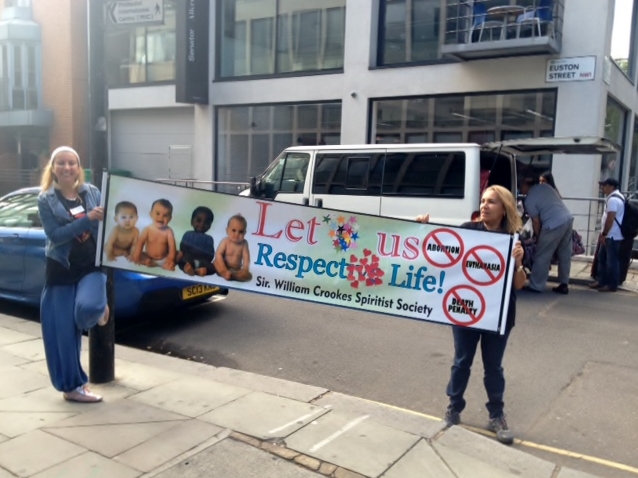
Respecting Life photo

Yesterday afternoon, in Euston, central London, I walked past a small group of women with a banner urging us to “Respect Life”, to say no to abortion, euthanasia and the death penalty. They belonged, as is clear from their banner, to the Sir William Crookes Spiritist Society.  I rejected one of their leaflets (which I now regret) even so they were happy for me to take a photo of them.

Of course I am one of the pro-choice majority when it comes to abortion.  I oppose forced pregnancy, I oppose forced abortion.  Women’s rights must include bodily autonomy and the freedom to choose what is best for them, albeit within the confines of patriarchal society.  Being pro-choice does not mean the same as being pro-abortion.  It does mean   making sure that women are supported, that though promoting and increasing access to contraception we reduce unwanted pregnancies, that through education we ensure that everyone understands how to avoid getting pregnant, as well as how to get pregnant.  Pro-choice means increasing ease of access to legal, early, safe abortion.  Pro-choice means not judging women who have abortion (s). I’ve heard that some infertile women oppose abortion, criticising women who have an abortion as ‘selfish’ when some of us can or could not have a child. I can’t see how reducing another woman’s liberties can ease the difficulty of infertility.   Women should never be reduced to baby-making machines, just as those of us who cannot have babies are no less women.

Pro-choice means believing that every child should be a wanted child, that seemed so clear to me until a few days ago, until I thought about sex-selective abortion as a result of a failure to prosecute two doctors who had carried out abortions on the basis of the sex of the foetus.  I am not comfortable with the position that  ‘a woman’s right to choose’ can be extended to femicide.  Like so often is the case for a radical feminist, the answer lies in ending the inequality between women and men.  The answer here is to change and challenge those beliefs that see a woman as ‘less than’ a man, a girl as ‘less than’ a boy. Until this happens, I remain uncomfortable with sex-selective abortions. I oppose femicide, but a foetus cannot be more important than a woman,  wanting every child to be a wanted child cannot be extended to forced pregnancy.  Being pro-choice is respecting life, it is respecting the lives of women and children.

Euthanasia, assisted suicide and/or the right to die should never become the duty to die for fear of being a burden on others, should never become elder abuse or  neglect.  The costs and difficulties of care  cannot be permitted to become reasons to kill.  It’s clear that strong laws, an ethical legal framework and guidance are necessary.  But being pro-choice and pro-bodily autonomy mean respecting the right to choose to die. Respecting life means respecting the right to die.

The Sir William Crookes Spiritist Society is opposed to the death penalty.  They do not think that the state has the right to murder murderers and violent, repeat sex offenders.  And neither do I.  Neither does the UK government, the death penalty was abolished  for murder in 1965, (in 1973 in Northern Ireland).  It was not finally abolished for high treason, piracy with violence, arson in the royal dockyards or espionage until 1998. According to Amnesty, across the world  21 countries carried out 682 executions (excluding China where figures are not released but are known to be very high) in 2012.   The top five executing countries in the world are China, Iran, Iraq, Saudi Arabia and USA, with Yemen closely behind. I hate violence but the death penalty is no solution.  Though I understand the anger,  the hatred for and the desire to punish those who abuse, rape and kill, the state should not be a killer. It’s illogical to argue that murder  is wrong through murdering.  Statistical evidence does not support that the death penalty deters crime.  In the USA for example, murder rates in states that do not impose the death penalty have remained consistently lower than in states with the death penalty.  It is also used disproportionately against those who face structural discrimination, people from black and minority ethnic groups. Respecting life means that the state should not be sanctioned to kill.

Worryingly, the Sir William Crookes Spiritist Society say that they provide counselling and moral education for children. Worryingly, I say, because  I don’t believe abortion, euthanasia and the death penalty are the same, I don’t believe that saying “No!” to them all is respecting life.  I don’t want those that conflate them to have any role whatsoever in educating children.  Respecting life does mean respecting the lives of killers and rapists. Respecting life means respecting choice, respecting life means respecting bodily autonomy. Respecting life means respecting women.  Respecting life means respecting the right to die.

Unknown's avatar

Femicide: UK women killed through suspected male violence January – August 2013

Many people know the statistic: ‘two women in England and Wales a week are killed through domestic violence‘; but how many try to connect with that and to feel the impact of what it really means?

Through naming the women killed, I’m trying to made the horror and unacceptability of what is happening to women feel more real. I began, in January 2012, by  recording the names of all women killed through domestic violence but as time went on, I wanted to make the connections between the different forms of fatal male violence against women. Since I started the list, I’ve counted 197 dead women.  I’m not going to stop counting and naming the women until I think the government is doing the same, ‘counting dead women’ and doing all it can to make the connections, making good its commitment to end male violence against women.  Please join me demanding action from the government by clicking here and signing my petition.

When I started keeping the list, I was shocked and angry about the lack of attention given to these murders, and what feels like a wilful refusal to look at the links between the forms and causes of violence against women. Male violence against women and girls is a cause and consequence of inequality between women and men, and until a government seriously approaches the issue from that perspective, women and girls will continue to be beaten, raped, assaulted, abused, controlled and killed by men.

The list below is the 78 UK women killed through suspected male violence so far in 2013.  78 women in  243 days, that’s one  woman every 3.1 days.

Janelle   Duncan Bailey 25 02-Jan
Akua   Agyueman 23 03-Jan
Anastasia   Voykina 23 07-Jan
Myrna   Kirby 57 11-Jan
Suzanne Bavette Newton 45 13-Jan
Virginja   Jurkiene 49 19-Jan
Chloe   Siokos 80 22-Jan
Debbie   Levey 44 28-Jan
Sasha   Marsden 16 31-Jan
Una   Crown 86 31-Jan
Hayley   Pointon 30 03-Feb
Pernella   Forgie 79 07-Feb
Ganimete   Hoti 42 11-Feb
Samantha   Medland 24 17-Feb
Alexis   Durant 42 20-Feb
Glynis   Solmaz 65 20-Feb
Dimitrina   Borisova 46 21-Feb
Victoria   Rose 58 02-Mar
Chantelle   Barnsdale-Quean 35 04-Mar
Susan   Cole 54 06-Mar
Christina   Edkins 16 06-Mar
Jennifer   Rennie 26 11-Mar
Daneshia   Arthur 30 18-Mar
Pamela   Jackson 55 last seen 20 March
Ellen   Ash 83 21-Mar
Mary   Roberts 50 27-Mar
Janis   Dundas 63 05-Apr
Deborah   Simister 45 08-Apr
Lisa   Clay 41 09-Apr
Mariam   Ali Shaaban Hussain Khesroh 24 11-Apr
Dawn   Warburton 40 13-Apr
Naika   Inayat 52 17-Apr
Jabeen   Younis 32 19-Apr
Irene   Dale 78 27-Apr
Heather   Arthur 50 29-Apr
Salma   Parveen 22 29-Apr
Christine   Baker 52 30-Apr
Margaret   Knight 77 01-May
Margaret   Mercati 63 15-May
Margery   Gilbey 88 24-May
Georgia   Williams 17 26-May
Yvonne   Walsh 25 02-Jun
Krishnamaya   Mabo 39 03-Jun
Myrna   Holman 76 03-Jun
Reema   Ramzan 18 04-Jun
Katie   Jenkin 20 08-Jun
Alice   McMeekin 58 08-Jun
Marianne   Stones 58 09-Jun
Lilima   Akter 27 14-Jun
Zaneta   Kindzierska 32 16-Jun
Mushammod   Asma Begum 21 20-Jun
Linzi   Ashton 25 29-Jun
Rania   Alayed 25
Louisa   Denby 84 01-Jul
Susan   White 51 01-Jul
Kate   Dixon 40 02-Jul
Denise   Williamson 44 05-Jul
Sabeen   Thandi 37 07-Jul
Shavani   Kapoor 35 10-Jul
Jane   McRae 55 17-Jul
Julie   Beattie 24 19-Jul
Rosemary   Gill 48 20-Jul
Alexandra   Kovacs 25 21-Jul
Jean   Redfern 67 22-Jul
Sarah   Redfern 33 22-Jul
Keisha   McKenzie 28 29-Jul
Linah   Keza 29 31-Jul
 
Anu   Kappor 27 04-Aug
Caroline   Parry 46 08-Aug
Mayurathy   Perinpamoorihy 06-Aug
Judith   Maude 57 11-Aug
Gail   Lucas 51 14-Aug
Orina   Morawiec 21 15-Aug
Julie   Connaughton 57 16-Aug
Jane   Wiggett 57 16-Aug
Sabrina   Moss 24 24-Aug
Merissa   McColm 31 25-Aug
Betty   Gallagher 87 25-Aug
Unknown's avatar

Femicide: UK women killed through suspected male violence January – July 2013

66 UK women killed through suspected male violence so far in 2013.  66 women in  212 days, that’s one  woman every 3.2 days.

Name Age Date killed
Janelle Duncan Bailey 25 02-Jan
Akua Agyueman 23 03-Jan
Anastasia Voykina 23 07-Jan
Myrna Kirby 57 11-Jan
Suzanne Bavette Newton 45 13-Jan
Virginja Jurkiene 49 19-Jan
Chloe Siokos 80 22-Jan
Debbie Levey 44 28-Jan
Sasha Marsden 16 31-Jan
Una Crown 86 31-Jan
Hayley Pointon 30 03-Feb
Pernella Forgie 79 07-Feb
Ganimete Hoti 42 11-Feb
Samantha Medland 24 17-Feb
Alexis Durant 42 20-Feb
Glynis Solmaz 65 20-Feb
Dimitrina Borisova 46 21-Feb
Victoria Rose 58 02-Mar
Chantelle Barnsdale-Quean 35 04-Mar
Susan Cole 54 06-Mar
Christina Edkins 16 06-Mar
Jennifer Rennie 26 11-Mar
Daneshia Arthur 30 18-Mar
Pamela Jackson 55 last seen 20 March
Mary Roberts 50 27-Mar
Janis Dundas 63 05-Apr
Deborah Simister 45 08-Apr
Lisa Clay 41 09-Apr
Mariam Ali Shaaban Hussain Khesroh 24 11-Apr
Dawn Warburton 40 13-Apr
Naika Inayat 52 17-Apr
Jabeen Younis 32 19-Apr
Irene Dale 78 27-Apr
Heather Arthur 50 29-Apr
Salma Parveen 22 29-Apr
Christine Baker 52 30-Apr
Margaret Knight 77 01-May
Sara Bates 33 04-May
Margaret Mercati 63 15-May
Margery Gilbey 88 24-May
Georgia Williams 17 26-May
Yvonne Walsh 25 02-Jun
Krishnamaya Mabo 39 03-Jun
Myrna Holman 76 03-Jun
Reema Ramzan 18 04-Jun
Katie Jenkin 20 08-Jun
Alice McMeekin 58 08-Jun
Marianne Stones 58 09-Jun
Lilima Akter 27 14-Jun
Zaneta Kindzierska 32 16-Jun
Mushammod Asma Begum 21 20-Jun
Linzi Ashton 25 29-Jun
Rania Alayed 25 Inconclusive, her body still has not   been found
Louisa Denby 84 01-Jul
Kate Dixon 40 02-Jul
Denise Williamson 44 05-Jul
Sabeen Thandi 37 07-Jul
Shavani Kapoor 35 10-Jul
Jane McRae 55 17-Jul
Julie Beattie 24 19-Jul
Rosemary Gill 48 20-Jul
Alexandra Kovacs 25 Inconclusive
Jean Redfern 67 22-Jul
Sarah Redfern 33 22-Jul
Keisha McKenzie 28 29-Jul
Linah Keza 29 31-Jul
Unknown's avatar

What about the men?

This is an update of a piece I wrote at the beginning of April about the men who killed women in the UK in 2012 and the methods they chose to do so.

Femicide is the killing of women by men because they are women, some include the killing of women by women where patriarchal views can be seen, in other words femicide is the killing of women  motivated, directly or indirectly, by misogyny and sexism.

I wrote  ‘Counting Dead Women’ on 25th March 2013 about  112 UK women killed in the UK through male violence in 2012, but through researching trial outcomes, that number was revised and had to be increased to 114. Repeating the exercise for this piece  eight  months later, again, the figure needs to be revised.  It now stands at 120.  120 women in the UK were killed through male violence in 2012, that’s one woman in the UK killed through male violence every 3.04 days.

The 120 women were killed by 118 men, four men were multiple killers. One man killed three women, three men killed two. Two women was killed by two men  and another by two men and a woman.

So far, 63 men have been found guilty of murdering 65 women.

Ten men, who killed 12 women between them have killed themselves. Five men shot themselves after shooting seven women, one man drowned himself after drowning his partner, one man hanged himself after strangling his partner and of three men who stabbed women they were or had been married to, one killed himself through poisoning, one by slitting his own throat and one in what is described as a serious self-harm incident whilst in prison.

17 men have been found not guilty or murder but guilty of manslaughter (two of which were culpable homicide sentences in Scotland). Even the name manslaughter renders women invisible.  Of the 17 men found not guilty of murder, nine pleaded diminished responsibility on the grounds of mental  health problems;  three pleaded loss of control and three that they did not intend to kill. (I’ve been unable to find details of the mitigating factors put forward by the remaining two men.)  Of the 17 men found not guilty of murder:  Four men  had killed women by stabbing them, one man by axing and stabbing, five men  had beaten women to death with an object, three men had strangled them, two men had kicked women to death, one man had smothered a women and one man killed a women through multiple injuries.  One of the men was found not guilty of murder but convicted of manslaughter with a sentence of only seven and a half years, despite killing a woman by stabbing/slashing her  11 times in what was described as a frenzied attack and a history of 25 court appearances for 44 offences, which include offences relating to domestic violence.

16 men killed their mothers, or have been accused of their killing. One man has been found guilty of killing his grandmother.  Five of the men who killed their mothers were found guilty of manslaughter/culpable homicide. Two men who killed their mothers also killed themselves.

14 cases have not yet been to trial and one man has been judged unfit to stand trial.

Five older women, aged between 75 and 88 years were killed by younger men, aged  between 15 and 43 years as they were robbed/mugged.  Two of the women died of head injuries, two were strangled and one was beaten to death with a hammer.

The average age of men in the UK who killed women in 2012 is 38. The average age of the women killed is 44. If the men who killed their mothers (or grandmother) and those who preyed on elderly women because of their vulnerability are removed, the average age of male killers becomes 40 and that of women killed becomes 39.

It’s often the case that details of how men have chosen to kill women are not reported until the case has gone to trial, so the following list is still incomplete. However, from what has been reported to date, the primary means selected by men to cause death to women have been:

  • Shot:                                                          7 women
  • Stabbed:                                                    34 women
  • Stabbed and beaten:                              4 women
  • Blunt force trauma:                               7 women
  • Strangled:                                                 12 women
  • Asphyxiation :                                          4 women
  • Strangled & asphyxiation:                     3 women
  • Strangled, beaten and stabbed:           4 women
  • Drowning:                                                 1 woman
  • Hammer injuries:                                    4 women
  • Stabbed/axed/slashed:                          4 women
  • Multiple injuries from kicking and beating:

                           8 women

  • Burned:                                                     1 woman
  • Fire:                                                            2 women
  • Head Injuries:                                          14 women
  • Deliberate Car Crash:                             1 woman
  • Body still not found:                               1 woman

When we look at women killed by men, it is important that we name men’s violence.

Unknown's avatar

Femicide: UK women killed through suspected male violence January – June 2013

52 UK women killed through suspected male violence so far in 2013.  52 women in  181 days, that’s one  woman every 3.48 days.

Janelle Duncan   Bailey 25 02-Jan
Akua Agyueman 23 03-Jan
Anastasia Voykina 23 07-Jan
Myrna Kirby 57 11-Jan
Suzanne Bavette Newton 45 13-Jan
Virginja Jurkiene 49 19-Jan
Chloe Siokos 80 22-Jan
Debbie Levey 44 28-Jan
Sasha Marsden 16 31-Jan
Una Crown 86 31-Jan
Hayley Pointon 30 03-Feb
Pernella Forgie 79 07-Feb
Ganimete Hoti 42 11-Feb
Samantha Medland 24 17-Feb
Alexis Durant 42 20-Feb
Glynis Solmaz 65 20-Feb
Dimitrina Borisova 46 21-Feb
Victoria Rose 58 02-Mar
Chantelle Barnsdale-Quean 35 04-Mar
Susan Cole 54 06-Mar
Christina Edkins 16 06-Mar
Jennifer Rennie 26 11-Mar
Daneshia Arthur 30 18-Mar
Pamela Jackson 55 last seen 20 March
Mary Roberts 50 27-Mar
Janis Dundas 63 05-Apr
Deborah Simister 45 08-Apr
Lisa Clay 41 09-Apr
Mariam   Ali Shaaban Hussain Khesroh 24 11-Apr
Dawn Warburton 40 13-Apr
Naika Inayat 52 17-Apr
Jabeen Younis 32 19-Apr
Irene Dale 78 27-Apr
Heather Arthur 50 29-Apr
Salma Parveen 22 29-Apr
Christine Baker 52 30-Apr
Margaret Knight 77 01-May
Sara Bates 33 04-May
Margaret Mercati 63 15-May
Margery Gilbey 88 24-May
Georgia Williams 17 26-May
Yvonne Walsh 25 02-Jun
Krishnamaya Mabo 39 03-Jun
Myrna Holman 76 03-Jun
Reema Ramzan 18 04-Jun
Katie Jenkin 20 08-Jun
Alice McMeekin 58 08-Jun
Marianne Stones 58 09-Jun
Lilima Akter 27 14-Jun
Zaneta Kindzierska 32 16-Jun
Mushammod Asma Begum 21 20-Jun
Linzi Ashton 25 29-Jun