Unknown's avatar

Abused women and children cannot be used as pawns in power politics

Men’s violence against and abuse of women, girls and children is not a party-political issue but of course responses must be led by whichever party holds power. The issue of so-called ‘rape gangs’ is currently being used by the Right to undermine the government which has been in power for six months. In particular, the rhetoric of Elon Musk towards Jess Phillips is incendiary, dangerous and does nothing to support victims of sexual violence whatsoever.

I understand why some people are angry. I’m angry. Again and again, we see failure to act on the recommendations of national and local inquires and ‘strategic needs analyses’. We see failure to act on the recommendations of reviews into individual deaths, such as Domestic Abuse Related Death Reviews (previously Domestic Homicide Reviews) and case reviews into the death or serious harm of children. This is unacceptable and both local, regional and national administrations/governments have failed victims in repeated and systemic failures to act on what is known. Equally, victims are failed by what is not known, or more accurately, what is not recorded and evidenced.

The chair of the Jay Review of Criminally Exploited Children published in November 2023, Prof Alexis Jay, told the BBC Radio Four Today Programme that lack of data means it is “impossible to know whether any particular ethnic group is over-represented as perpetrators of child sexual exploitation by networks” and that one of the review’s recommendations was improved data collection. It should be unacceptable that this was ever the case, more so that it remains the case because the review recommendations still have not been implemented.

It is clear that there are patterns in the ethnicities of perpetrators and victims and geographical distribution of child rape gangs and some other forms on men’s violence against women and girls. It is not racist to say this, but it is racist to extrapolate from this to make assumptions and statements about the characteristics of all people who share ethnic and religious characteristics with the perpetrators. It is racist, as Robert Jenrick, the Shadow Secretary of State for Justice did, to forefront some cultures as having ‘medieval attitudes to women’ and overlook the fact that sexism, misogyny and the abuse of women and children crosses all cultures. It is inflammatory and irresponsible and risks re-igniting the rioting of the summer of 2024 where innocent people, including women and children, were afraid to leave their homes and two hotels housing asylum seekers in Rotherham and Tamworth were targeted by far-right, racist, and Islamophobic rioters. Jenrick has further claimed that the grooming gangs scandal “started with the onset of mass migration” but he ignores other forms of organised sexual exploitation of children, young people and women, such as under the roofs of Catholic or Christian churches, elite boarding  schools and residential schools for troubled children, children’s homes or family homes, whether organised and used by politicians, the police, celebrities or those we’d call ‘ordinary men’.

I’ve worked in organisations supporting victim-survivors of men’s violence for almost 35 years. From 1995 to 2,000, I worked in a hostel for homeless women in Bradford. We worked with mainly younger women, young women who weren’t usually coming with domestic abuse as a presenting issue and some had problematic substance use. Heroin was starting to become easily available in the city at this time. Some were care leavers. In any case, most weren’t eligible for support from refuges or had been asked to leave refuge accommodation because of their behaviour. But most had long histories of abuse, sometimes life-long. Most agencies deemed such young women as beyond help. They were seen as problems, certainly not young women whose needs should be prioritised. Victim-blaming was rife and institutionalised. You only have too look at how West Yorkshire police and the media viewed the victims of Peter Sutcliffe to find see this. Men like Peter Sutcliffe may be mercifully rare, but the response to those upon whom he preyed was far from usual and remains.

Not all women abused, used and violated through semi-organised child sexual exploitation were from working-class back grounds, but, I am sure that if we had accurate records, we would be able to say that they were disproportionately so. Or worse, young women who had grown up in families who had long since been written off. They were products of multi-generational poverty, joblessness and deprivation. You have to have a sense of the impact on regional collective mood in the North of the end of the coal industry, but also the end of widescale textile production in the mills, the end of mass production of steel, the end of ship building, to have a sense of the pervasive hopelessness for many.

We still don’t know the real extent of sexual and domestic violence abuse. We don’t know the extent of prostitution, we don’t know the extent of child sexual exploitation. It remains the case that most violence against women, girls and children is never formally reported and so never counted. But for decades, we feminists have known that which most of the rest of society refuses to acknowledge, the scale of child sex abuse is far greater than that which is commonly assumed. As Bea Campbell movingly tells in her book Secrets and Silence, the Cleveland scandal of child sex abuse in the 1980S was not a scandal of over-zealous professional inventing evidence of child sex-abuse that did not happen, as many of those who remember misremember, it was a scandal of child-sex abuse denied and covered up because most were not ready to face the truth or finance the implications of that truth. Allegations of sexual abuse were made against Cyril Smith, the Rochdale MP from 1972 to 1992, as early as 1969, but no action was taken. Since his death, it has been found that he was abusing, including raping, boys between 1960 and 1987. Jimmy Savile was never held to account and is known to have abused hundreds. The records of Rape Crisis organisations give an indication of how many women and girls are have been regularly raped and violated at home and also how many believe that justice will never be theirs.

Children of all religious and ethnic backgrounds are victims, people – the vast majority of which are men – of all religious and ethnic backgrounds  are perpetrators. Equally, we know that all forms of sexual and domestic violence and abuse are under-reported; and that support for victims and actions to hold perpetrators to account are under-resourced. No government to date has set out an effective strategy to seriously reduce, let alone end, men’s violence against and abuse of women, girls and children.

Prof Alexis Jay does not support another review or independent inquiry. She said “We’ve had enough of inquiries, consultations and discussions, and especially for those victims and survivors who’ve had the courage to come forward, and they clearly want action. We have set out what action is required and people should just get on with it. Locally and nationally.”

We need to put supporting and responding to the needs of existing victims first. We need to stop the hierarchy of victims where some are more likely to be believed, some are more likely to see justice and some are more likely to be ignored or blamed for the abuse that they were subjected to. The law must apply equally to all perpetrators. We cannot see men’s violence against women, girls and children as a class or race issue but neither can we deny how these issues intersect with perpetration, victimisation, accountability and justice.

Policing, the criminal justice system, state organisations and independent non-state organisations, particularly the specialist women’s sector, must be adequately resourced to support victims and hold perpetrators to account.  We cannot refuse to see uncomfortable truths whether we’re talking about people that we perceive to be similar or different from ourselves. We need to act on what we know and close the evidence gaps around that which we have not yet documented. We need to challenge institutional reluctance to name this as a ‘man’ problem whilst not denying that women can abuse, facilitate and men and boys can be victims. We need to ask why there isn’t wider outrage at our shamefully low conviction rates for rape and ask why this itself is not seen as a cover-up or societal collusion with rapists.

We cannot allow the response to sexual and domestic violence and abuse to be hijacked by those with the deepest pockets, the loudest voices and those with nefarious agendas, however compelling they sometimes are. We cannot refuse to make the links between child sexual exploitation, pornography and prostitution. A society that condones the purchase of ‘consent’ to sexual access is one where men’s entitlement and women’s objectification and where sexual exploitation is normalised.

We need to believe that men’s violence against and abuse of women, girls and children is not inevitable and act accordingly. Whilst our goals and actions must be across party political divides, they must be set without prejudice, be victim-centred and implemented with determination. Abused women and children cannot be used as pawns in power politics.
Unknown's avatar

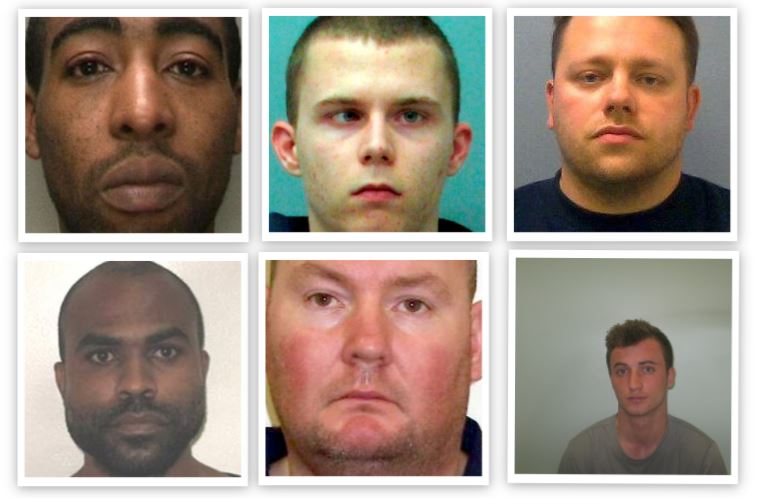
A Tale of Six Johns

6 Johns

(Image: Top, L to R: Mathew Cherrington, Mateusz Kosecki, Michael Wenham.

Bottom L to R: Robert Fraser, Steven Mathieson, Nicholae Patraucean)

Prostitution is not safe for women. Women who sell sex face regular physical and sexual violence. More than half of women involved in prostitution in the UK have been raped and/or sexually assaulted – the vast majority of these assaults committed by sex buyers (Hester & Westmarland, 2004). Last year, 2014, six women who sell sex were murdered in the UK: Maria Duque-Tunjano, 48; Karolina Nowikiewicz, 25; Rivka Holden, 55; Yvette Hallsworth, 36; Lidia Pascale, 26 and Luciana Maurer, 23. They were all killed by johns, that is by men who buy sex.

Prostitution is often framed in the context of women’s choices, those of us who oppose prostitution accused of denying women’s agency, their capacity to choose and their right to do so.  But a choice based on necessity, on a lack of viable alternatives isn’t really a choice.  Five of the six women above were not born in the UK, coming from Colombia, Poland, Israel and two from Romania.  The only UK born woman had a problem with substance use.  Poor women, migrant women and women with problematic substance use are disproportionately represented amongst women who sell sex.  And whilst some men sell sex, women do so disproportionately. Men are also overwhelmingly, regardless of the sex of the seller, the buyers.

Mathew Cherrington had been exercising his consumer choices.  The 26-year-old man’s phone records showed he had contacted several women who sold sex before arranging for 26-year-old Lidia Pascale to visit his flat. She suffered at least 11 blows to her head and had injuries on her hands, where she’d put them on her head trying to defend herself.  After killing her, Cherrington put Lidia in a black bin bag and into a bin. The final insult, the bin, the destination of unwanted, broken, expended consumables, rubbish.

Mateusz Kosecki chose Yvette Hallsworth because she was “slightly built.”   At 18 he was already a predator who preyed on women in prostitution.  He had attacked at least three women who sold sex before he killed Yvette Hallsworth, luring her into a secluded  alley before stabbing her 18 times using a knife that he had taken out with him.  A judge described him has having a ‘fascination, if not an obsession” with prostituted women. His attack on Yvette was described as cruel and savage.

Habitual sex-buyer and frequent consumer of pornography Michael Wenham had spent £15,000 on trying to enlarge his penis but instead lost two inches.  He had been married eight years and had three children.  He phoned in sick to work and bought a Stanley knife, gloves and plastic sacks.  He contacted Karolina Nowikiewicz after the first woman he called wasn’t available. After asking Karolina to undress and get on all fours, he attacked her from behind, slashing her throat, cutting through her major arteries and spinal cord and almost decapitating her. In court, the attack was described as “premeditated, planned and clinically executed.” Karolina was a student, selling sex to fund her studies.

40-year-old ex-banker Robert Fraser was deemed an “ongoing and very real danger to women” by Judge John Bevan.  Diagnosed as suffering from paranoid-schizophrenia he is said to have believed that god represented men and the devil represented women.  He attacked a 27-year-old prostituted woman in January last year, convincing her that he was going to kill her, shoving her underwear in to her mouth before twisting her head as if he was going to break her neck. 10 days later he bludgeoned Maria Durque-Tunjano to death, she was killed by blunt force trauma to the head.  Colombian born British national Maria had been financially supporting her family in Colombia through prostitution.  She was still wearing a black corset and high-heeled shoes when her body was found.

Father of two, Steven Mathieson, was in debt due to the extent of his use of phone sex lines. His partner, who knew of neither the phone sex or the debt, was out for the evening and he made arrangements for three women to come to his home. Luciana Maurer was the first to arrive.  With his four-year-old son asleep in the house he stabbed her 44 times and cut her throat in an upstairs bedroom. When the other women arrived, he took them in to the room where they immediately saw her dead on the bed. He forced them to strip and to dance for him and raped them both.  The naked women were able to escape when Mathieson thought he heard his partner returning.  Mathieson dialled 999 and said “I’ve been high on drugs and killed a prostitute.” According to his legal advocate, before that evening, Mathieson had been of “impeccable character.”

Nicolae Patraucean, 21, like Michael Wenham, chose to use a Stanley knife to slit the throat of and dismember Rivka Holden after strangling her following his celebrations at having obtained a national insurance number.  Patrucean’s attitude to women in prostitution was illustrated in his statement to a friend “I killed a person … not a person, a whore.”

All women should be safe from men’s violence. With the exception of those whose misogyny infused denial runs so deep that their immediate reaction to that statement is anything on the continuum of ‘what about the men’ responses, there are few who would disagree.  Similarly, I don’t know any feminist with an opinion on prostitution that believes women who sell sex should face or fear violence. If abolitionists, harm-reducers and free-choice free-market celebrants of prostitution agree on one thing, surely it is this.

Having a market of women – whether we are selling sex or whether our modified and culturally idealised images are used to adorn adverts  of other products – commodifies women. It makes us into objects.  As objects we become ‘less than’, less than fully human, not equal. Our value is set by our worth as products on the scale of marketability. This affects all women, whether or not we are those for sale or those used to boost sales. It’s no coincidence that we talk about purchasing power.  Regulating the sale of sex doesn’t empower women, it further endorses men’s power over the women by giving them consumer status, rights and choices.  Women, on the other hand, become  commodities, interchangeable and disposable.

We need to change men’s attitudes to women, we need to eradicate the misogyny and entitlement that fuels men’s violence against women.  Inequality between women and men is a cause and a consequence of men’s violence against women. We simply cannot achieve equality between the sexes, let alone the liberation of women from men’s oppression, whilst one sex is for sale, the consumable, and one sex is the buyer, the consumer. Women’s rights to safety must always be greater than men’s rights as consumers.

Six men: A Nick, a Mick, a Steve, a Bob and two Matts. All Johns.  Six women: Maria, Karolina, Rivka, Yvette, Lidia and Luciana.  All dead. Women should not be for sale.

Unknown's avatar

If we’re serious about ending men’s violence against women and girls, we need to listen to feminists

The UK’s lack of “a consistent and coherent approach to tackling violence against women”  has been criticised in an official report  by the UN special rapporteur, Rashida Manjoo .  In addition, last week Professor Sylvia Walby, UNESCO chair of gender research at Lancaster University, criticised official statistics for drastically under-representing the scale of  violent crime against women.

Whilst the UN report commends the  “excellent policy framework” created by the Home Secretary, Theresa May, in the Government’s Call to End Violence Against Women and Girls, it notes that “isolated pockets of good practice” are compromised by the “lack of a consistent and coherent human-rights based approach in the government’s response to violence against women and girls”.

Walby explained, at a meeting at the UK Statistics Agency, that the Crime Survey of England and Wales fails to account for nearly half the attacks on women as it caps the number of separate crimes that can be reported by a single respondent at five.  She found that if the cap is removed violent crime against women by partners and acquaintances, rise by 70% and 100% respectively, in other words men’s violence against women is massively understated in official statistics. (I’ve also looked at the reality of sex differences in domestic violence before,  here, and specifically in relation to fatal intimate partner violence here.)

The government doggedly hangs on to its ‘gender neutral’ definition of domestic violence:  “any incident or pattern of incidents of controlling, coercive, threatening behaviour, violence or abuse between those aged 16 or over who are, or have been, intimate partners or family members regardless of gender or sexuality. The abuse can encompass, but is not limited to: psychological, physical, sexual, financial [and] emotional.”  The definition treats ‘sex’ and ‘gender’ as the same thing, it erases sex differences and it obscures the differences between intimate partner violence and other forms of domestic/family violence (the latter also repeated in the UN report).

The UN report also expresses concern about the shift from gender specificity to gender neutrality in our definitions of intimate partner violence, domestic violence and sexual violence (also with regards to service provision) which it refers to as a regressive measure .  The  fear of naming the agent of violence, men, is one of the most significant failings of the government’s definition and has repercussions in national and local policy and ultimately in the lives – and deaths – of women. Of  the 249 women, who according to government statistics were killed in partner/ex-partner over the last 3 years, 247 were killed by a man, one by a woman (in one case the primary suspect is listed as unknown). Of 57 men killed in partner/ex-partner homicides, 21 of them, over a third, were killed by a man.  The numbers aren’t the only difference, when men kill women partners or ex-partners, this usually follows months or years of them abusing her, when women kill male partners or ex-partners, it is usually after months or years of having been abused by the man they have killed. The relationship between abuse of women and abused women killing men is such that the development of refuges has led to a greater decrease in men being killed by partners than women.

Yes, men can experience violence too and yes, men can experience violence perpetrated by women but most violence – whether against women or men is perpetrated by men; and when we talk about intimate-partner violence and sexual violence, it is overwhelmingly perpetrated by men upon women and girls Intimate partner violence and wider domestic violence certainly do not occur “regardless of gender”.

Coercive control has been included in the government’s definition of domestic violence, but as Liz Kelly and Nicole Westmarland explain, intimate partner violence doesn’t just include coercive control, “it is a pattern of coercive control.” Men’s violence against their partners and ex-partners isn’t a series of isolated and unlinked incidents.  This is true on a societal level as well as within individuals’ relationships.  Not all men are violent and violent men are not violent all the time; but all women are affected by men’s violence and women  who are in relationships with violent men are affected even when they’re not being violent. Inequality between women and men is a cause and consequence of men’s violence against women. Men’s violence against women isn’t just a problem in some relationships,  it is a social problem.

An international study of the issues that relate to the different  rates of intimate partner violence in 44 different countries and including 481,205 women found that the most significant factors are those which have been long identified by feminists: socially constructed gender-related norms that normalise men’s violence against and control of women partners and inequality between women and men. Last year Britain fell to 26th place on the World Economic Forum’s Gender Gap Index – lower than most of the rest of Europe. It was the UK’s lowest overall score since 2008.

Until we understand the differences and overlaps between intimate partner violence, domestic and sexual violence and the huge sex differences therein, until the majority of us openly decry men’s rights activists who try to deny reality, we will not be taking one of the most fundamental steps necessary to solving any problem: namely defining the nature of that problem.   If the government is serious about ending men’s  violence against women it needs to look at the causes: sex inequality, the objectification of women  and socially constructed gender roles that create toxic norms of masculinity and femininity.

Isn’t it time for us to get over the reluctance to actually name and condemn men’s violence? Isn’t it time that we worked with the causes of men’s violence and not just the results?  Isn’t it time that we listened to feminists? Because feminists have been saying this for decades.